Developer Experience Is Product Work
Your internal tools and processes are products. Treat them that way.
Your internal tools and processes are products. Treat them that way.
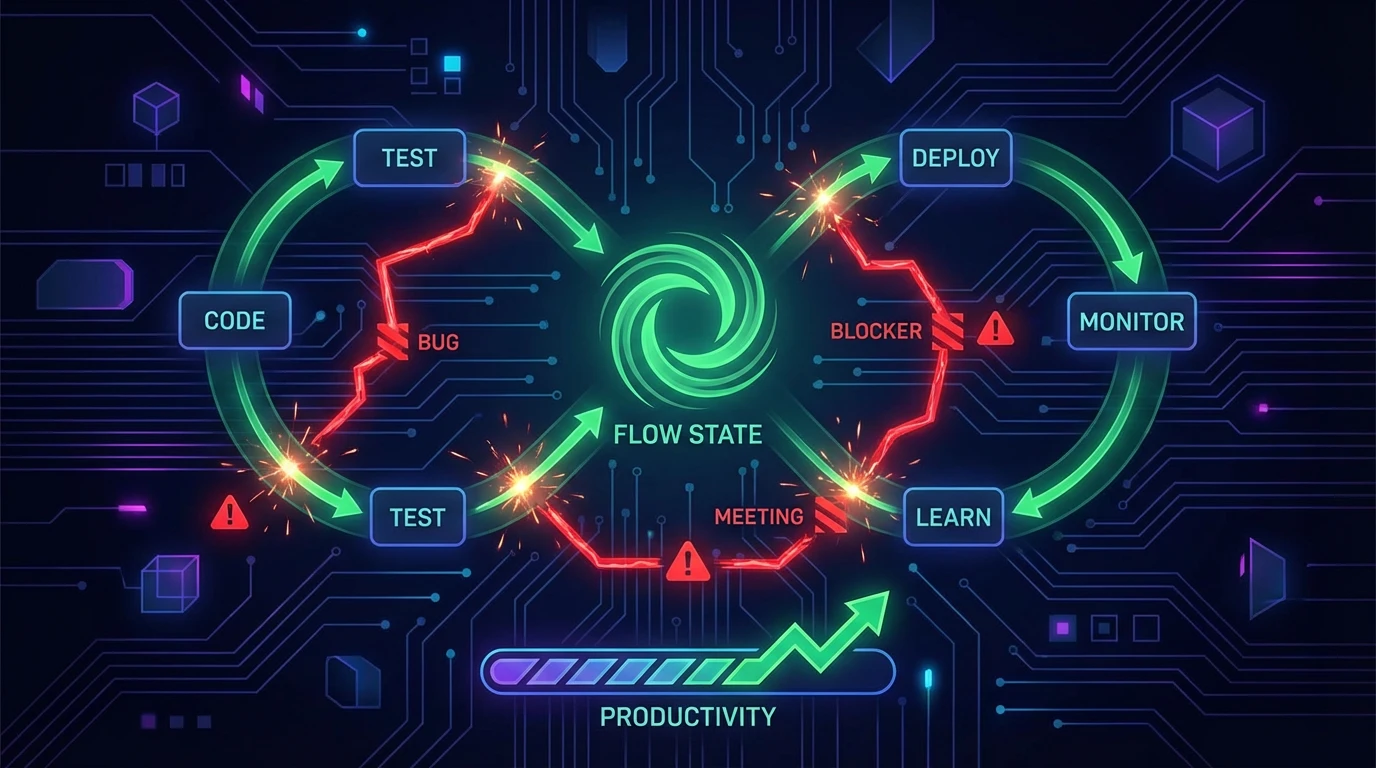
Engineers spend 30-50% of their time not coding. They're waiting for builds. Fighting with tooling. Searching for documentation. Setting up environments.
This is waste. Expensive waste.
If you spend $150K on an engineer and 40% of their time is friction, that's $60K/year going to tooling problems. Multiply by team size. The numbers get big fast.
Developer experience (DX) isn't a nice-to-have. It's ROI.
Everything that affects how efficiently developers can do their work:
Each of these is a product problem with users (developers) and metrics.
You can't improve what you don't measure.
Time to first commit: How long from "new engineer starts" to "merged PR"?
Build time: How long from code change to feedback?
Deploy frequency: How often does code ship?
Time in review: How long do PRs wait?
Incident recovery time: How long to diagnose and fix?
Search success: Can people find documentation/code?
Track these. Set targets. Improve them.
If your build takes 20 minutes, developers context-switch. They start something else. They lose focus. They don't run builds as often, so problems compound.
Fixes:
Target: feedback in under 5 minutes for local changes. Under 15 for full CI.
"Just follow the README." Three hours later, nothing works.
Fixes:
Target: New engineer coding productively within first day.
If deploying is scary, people deploy less. Bigger batches. More risk. More fear.
Fixes:
Target: Deploy daily (or more) without drama.
Documentation exists but is wrong. So nobody trusts it. So nobody maintains it. Death spiral.
Fixes:
Target: Engineers can find accurate answers without asking someone. (More on this in Creating Clear and Comprehensive Digital Product Documentation.)
Something's wrong. Where? Logs are useless. No tracing. Hours wasted.
Fixes:
Target: Diagnose issues in minutes, not hours.
DX should be treated like product work:
Understand your users. Talk to developers. What frustrates them? What do they wish for?
Prioritize by impact. Fix the things that affect everyone frequently.
Measure outcomes. Not "we shipped a tool" but "build time decreased 50%."
Iterate. Ship improvements, get feedback, improve more.
Communicate. Let people know what's changing and why.
Options:
Platform team: Dedicated team owns internal tools and infrastructure.
Embedded in teams: Each team owns their own tooling.
Hybrid: Platform provides foundations, teams extend.
Regardless of structure, someone needs to care about the overall experience. Don't let it fall through the cracks.
CFO asks: "Why are we spending money on internal tooling?"
The math:
This ignores: faster shipping, better morale, easier hiring, fewer incidents.
DX investment pays for itself.
If you're starting from scratch:
You don't need a platform team to start. You just need to care.
Developer experience is a force multiplier. Every improvement helps everyone, every day. Investing in DX is investing in your team's ability to ship.
It's not overhead. It's product work for an internal product.